ABx Group Pushes Ahead with Heap Leach Breakthrough for Rare Earths in Tasmania

In a rare turn of events in the ionic clay sector, ABx Group (ASX: ABX) has delivered what could be described as a game-changing advance for Australian rare earths hopefuls. The company has announced preliminary results from two column leach tests conducted by the Australian Nuclear Science and Technology Organisation (ANSTO), revealing heap leaching may be not only feasible - but highly effective - at its Deep Leads project in northern Tasmania .

The headline number? A standout 81% rare earths extraction from one of the 26 kg bulk samples. Importantly, this included a 76% extraction rate for dysprosium (Dy) and 79% for terbium (Tb) - two of the most valuable and geopolitically sensitive rare earths used in permanent magnets for EVs and wind turbines .
Heap leaching has long been touted as the holy grail of rare earths processing in ionic clays - provided the extraction rates stack up. It’s less capital intensive than traditional tank leaching and typically involves sprinkling a benign salt solution over ore piled on a lined pad. If the leachate percolates properly and extractive performance is high, the economics can be very favourable.
ABx Managing Director and CEO, Dr Mark Cooksey, was keen to underline the implications: “These preliminary column leach results are extremely encouraging. Achieving very high extractions of the most valuable and important heavy rare earths... strongly supports the potential for heap leaching at Deep Leads,” he said. “Heap leaching potentially offers a compelling pathway to lower capital intensity, consistent with the ABx strategy to commence commercial production as soon as possible” .
The tests were conducted on ore from trial pit DLP002. The samples were carefully homogenised and screened, before being loaded into two 2.4-metre-high columns at ANSTO. One test used a 0.30 M ammonium sulfate solution, while the second used 0.15 M. Irrigation occurred at ambient temperatures and an acidic pH of around 4.0 - conditions that simulate real-world heap leaching operations .
Low impurity levels were a standout feature, particularly minimal aluminium dissolution. This bodes well for future processing steps and is consistent with previous tank leach and impurity removal trials. Final results, including analysis of the solid residues and final kinetics, are expected in early January.
The latest news builds on a string of recent milestones for ABx. Earlier this month, the company produced its maiden mixed rare earth carbonate (MREC) from Deep Leads - a product enriched with Dy and Tb that was shown to command a basket price between 17% and 51% higher than comparable peer MRECs. That MREC comprised 4.0% Dy and 0.7% Tb of total rare earth oxides, more than double the concentration seen in other non-Chinese ionic clay projects.

Figure 2: MREC produced from ABx Deep Leads deposit in northern Tasmania
In parallel, ABx has secured a new exploration licence (EL25/2022), expanding its rare earths footprint by 18 km² between the Rubble Mound and Wind Break deposits. The total resource in the area now stands at 89 million tonnes grading 844 ppm TREO, with a remarkable 4.3% comprising Dy and Tb - the highest ratio of any ionic clay deposit in Australia.
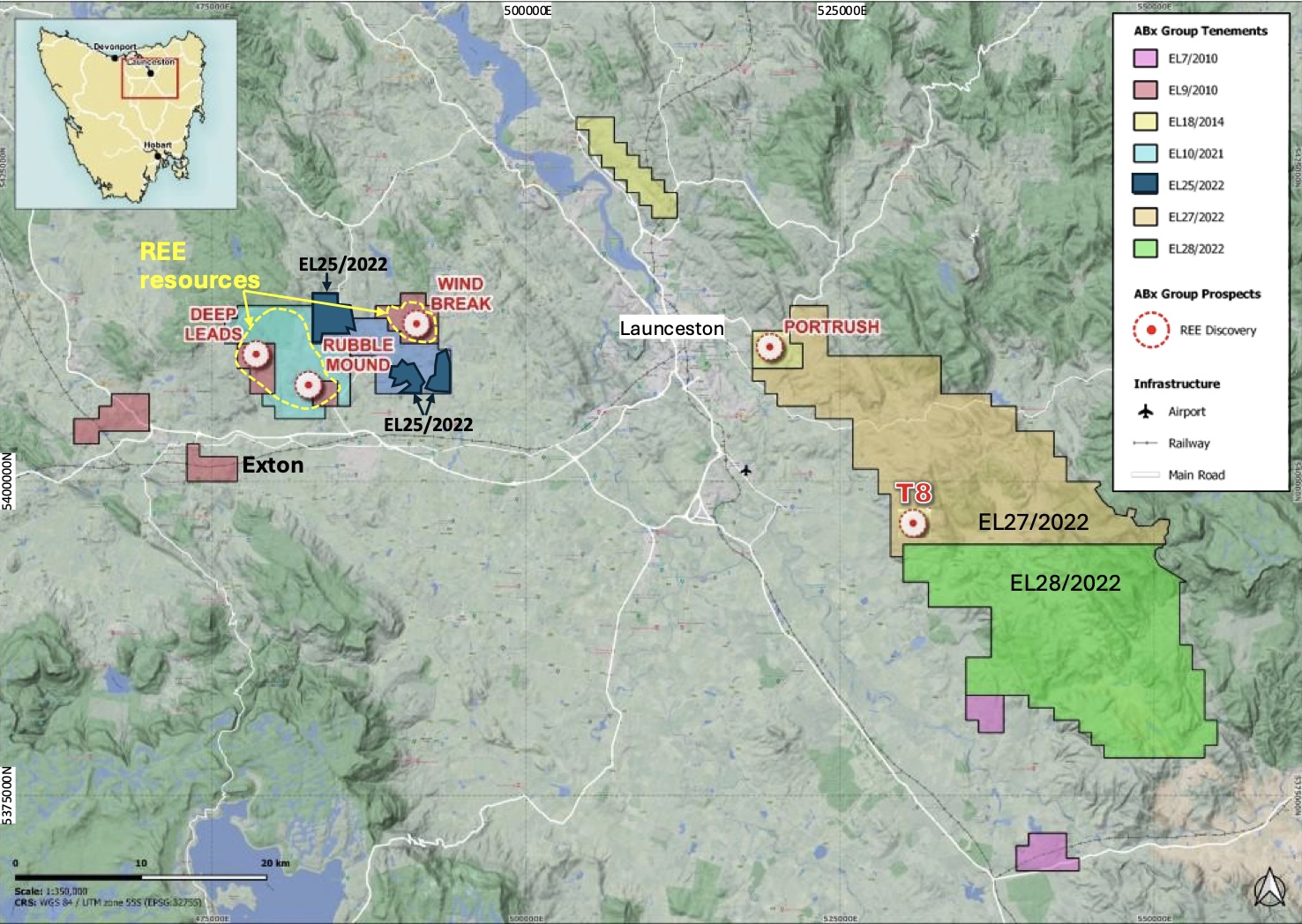
Figure 3: Location of EL25/2022 in northern Tasmania
From an investor perspective, the confluence of factors - heap leach amenability, rich DyTb content, low impurities, and scale - positions ABx as a rare earths junior worth watching closely. The ability to achieve high extractions at ambient conditions not only de-risks the project from a processing standpoint but could also enhance its ESG credentials, an increasingly key metric for global buyers.
Of course, challenges remain. The column tests are not yet finalised, and commercial heap leach operations are still on the horizon. But with ANSTO in its corner and a resource loaded with high-value heavies, ABx is ticking some critical boxes.
In the words of Dr Cooksey, “The combination of high-value rare earths, straightforward metallurgy, and strong customer interest makes this a compelling project.”
All eyes now turn to the final leach results in January—and what could follow in terms of project finance, offtake deals, and a potential path to production.