Tasmania’s Rare Earths Just Got a Bit Rarer – and Richer

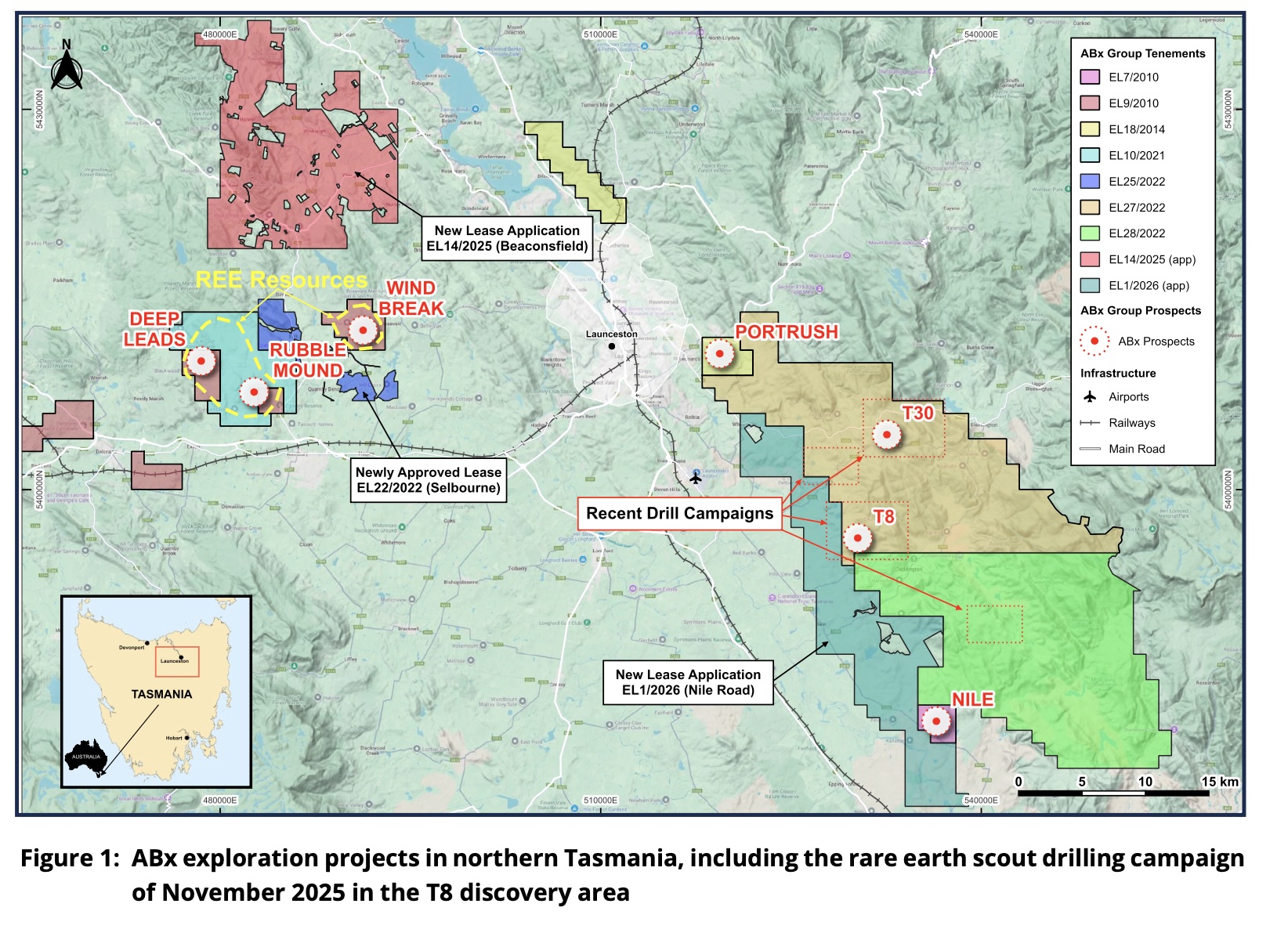
in a timely bit of geological good fortune, ABx Group (ASX: ABX) has struck a rich seam of rare earth optimism in northern Tasmania, extending its T8 rare earth province with a fresh batch of promising drill results. Announced on 20 January 2026, the scout drilling campaign - conducted some 52 kilometres east of ABx’s existing Deep Leads project - has returned assays as high as 3,527 parts per million (ppm) of total rare earth oxides (TREO), with a particularly attractive tilt towards the elusive heavy rare earths: dysprosium (Dy) and terbium (Tb).
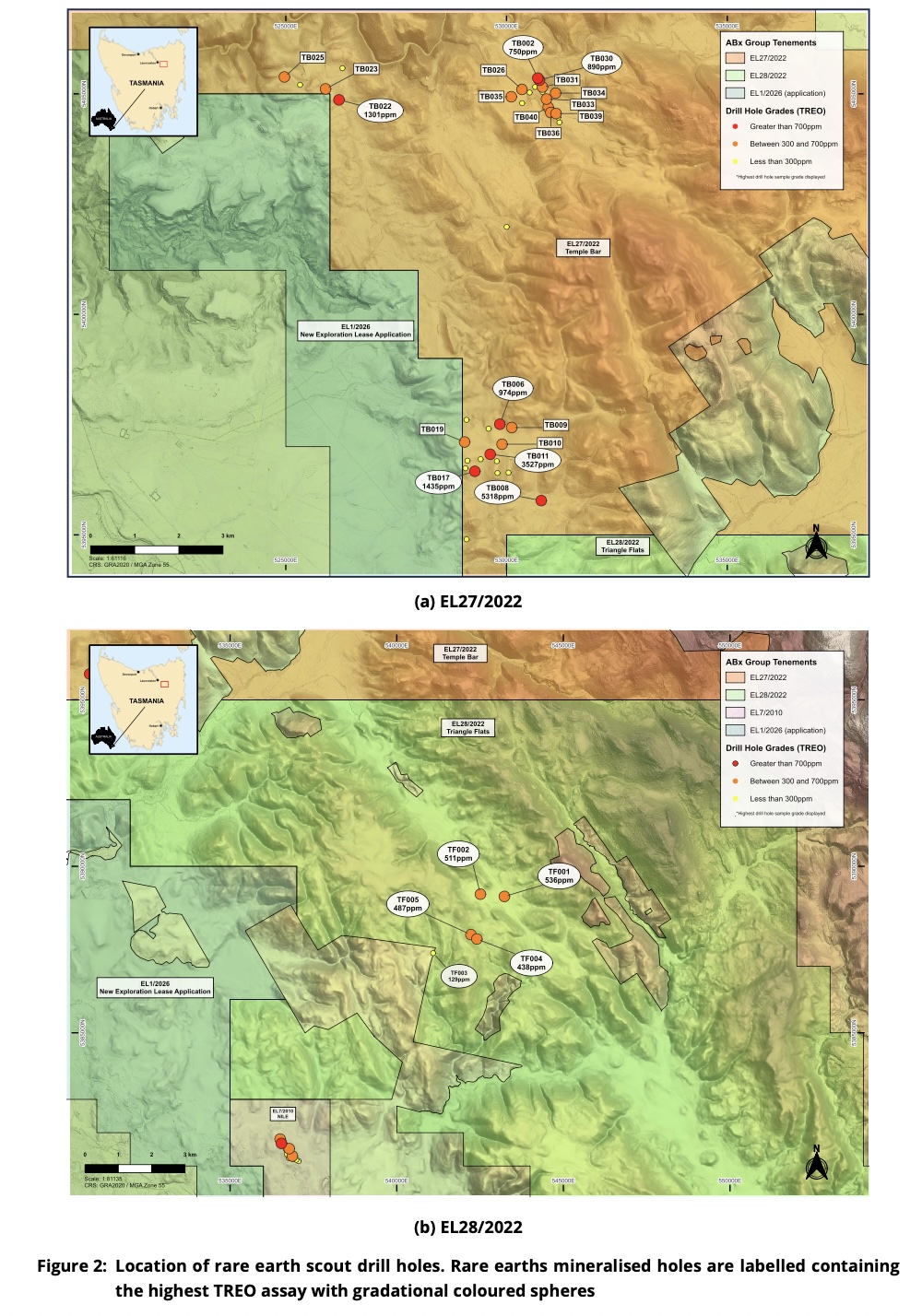
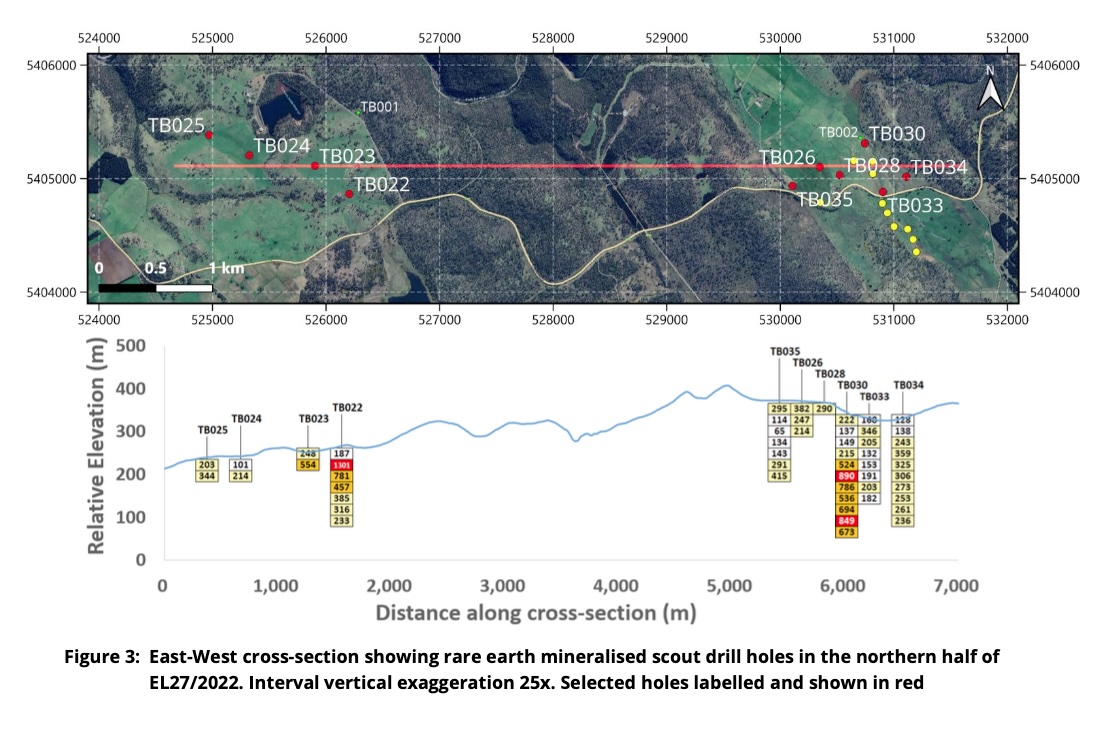
The best-performing hole, TB030, hit a seven-metre stretch averaging 707 ppm TREO from just four metres below surface. It topped out at 890 ppm and finished at the limits of the auger rig's mechanical capacity - mineralisation was still open at depth. Importantly, the hole revealed a Dy+Tb/TREO ratio of 5.4%, maintaining ABx’s reputation for heavy rare earth enrichment in ionic adsorption clays.
ABx CEO Dr Mark Cooksey was quick to underscore the significance of the results, “ABx is delighted by the confirmation of further high-grade rare earth mineralisation in its eastern tenements. It is especially exciting that there is a very high proportion of Dy and Tb, like all of ABx’s rare earth resources and discoveries in northern Tasmania.”
He added, “No other Australian company holds an entire province that contains ionic adsorption clay rare earths so enriched in Dy & Tb, which is potentially globally significant. Our mission is to devise a low-cost, low-impact method of exploiting this rare earth province, and ABx is incredibly well positioned to take advantage of the Federal Government’s Critical Minerals Strategic Reserve.”
The Bigger Picture: Critical Minerals Strategy
The announcement aligns neatly with Canberra’s recently unveiled $1 billion Critical Minerals Strategic Reserve (CMSR), part of the broader $5 billion Critical Minerals Facility. The CMSR is designed to secure domestic supplies of critical inputs - with rare earths named a top priority. Given ABx’s near-surface clay-hosted resource and processing tie-ups (notably with Ucore in the United States), the company is sitting squarely in the frame for strategic backing.
The ionic clay style of mineralisation also gives ABx a metallurgical leg-up - typically easier and cleaner to process than hard rock rare earths, with lower energy and chemical inputs required.
Exploration Footprint Widens
Drilling took place across the Temple Bar (EL27/2022) and Triangle Flat (EL28/2022) tenements, following access agreements with local landowners. TB030, located in Temple Bar’s northeast, is a stone’s throw (about 80 metres) from the 2025 discovery hole TB002. Both terminated in mineralisation, hinting at a mineralised system that extends deeper than the drill rig could probe.
Further south at Triangle Flat, three of five auger holes intersected rare earth-enriched clays, with TF001 recording a peak interval of 536 ppm TREO. While not as headline-grabbing as TB030, these hits maintain ABx’s high-value Dy and Tb signature.

Resource, Reach, and Readiness
ABx’s cornerstone Deep Leads - Rubble Mound - Wind Break resource already sits at 89 million tonnes grading 844 ppm TREO, including 36 ppm of Dy and Tb. This heavy rare earth content is the highest of any ionic clay deposit in Australia and among the highest globally.
And they’re only just scratching the surface - literally. That estimate covers just 29% of the known mineralised area.
The company is now eyeing further expansion west of its current leases, including the newly applied-for EL1/2026 near Nile Road, where even historical bauxite drill holes have shown rare earth hits above 1,100 ppm.
Outlook: From Scout Holes to Strategic Supply
With global tensions and decarbonisation goals fuelling demand for rare earths - especially the heavyweights Dy and Tb used in EV motors and wind turbines - ABx’s ionic clay discoveries are riding a well-timed wave. Add in strategic government funding and Western processing partnerships, and the stage is set for ABx to evolve from exploration hopeful to a key Australian player in rare earth supply chains.
For now, the mission is simple: define, refine, and align - with metallurgy, environmental stewardship, and government strategy marching in step.